ChatGPT, Gemini and Claude all run on large language models. What an LLM is, how it learns and where it goes wrong, in plain English.
Table of contents
ChatGPT, Gemini and Claude are all built on large language models, or LLMs. The name sounds technical, but the basic idea is easy to follow.
The short version
An LLM is a computer program trained on a huge amount of text. During training it learns how words tend to follow each other, so it gets very good at predicting the next word in a sentence. Doing that over and over, very fast, lets it answer questions, write emails, explain topics and write code.
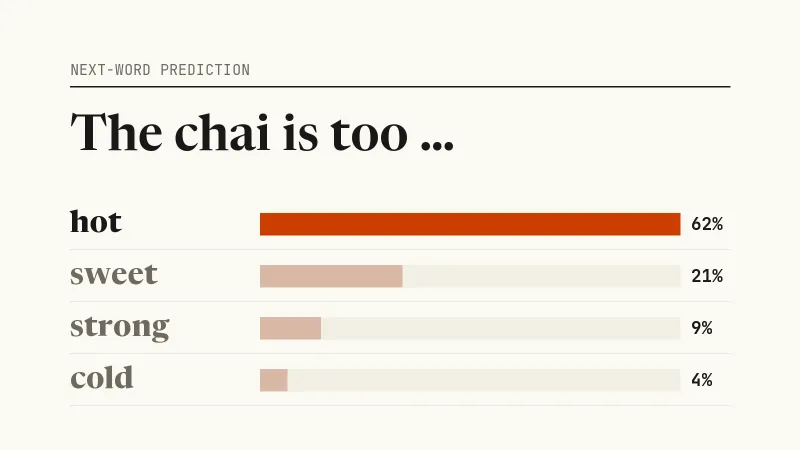
Type "The chai is too" and the model works out which words are likely to come next, such as "hot", "sweet" or "strong", and picks one. Then it does the same for the word after that, and so on.
How it learns
- Collecting text. Books, websites, articles and code are gathered, often trillions of words in total.
- Training. The model reads the text and keeps guessing the next word. Every wrong guess slightly adjusts its internal settings, called parameters.
- Fine-tuning. People then train it further to follow instructions, be helpful and refuse harmful requests.
After training, the model does not look things up in that text. It has learned patterns, which is why it can write sentences that never existed before.
What LLMs are good at
- Explaining a topic in simple words
- Summarising long documents
- Drafting emails, posts and messages
- Writing and fixing code
- Translating between languages
Where they go wrong
They can make things up and say them with full confidence. This is called hallucination. Their knowledge also stops at the date their training data ends, unless the chatbot can search the web. And they don't understand the world the way people do. They are very good at predicting text.
Warning
Check facts, numbers and dates before you use them, especially for health, legal or money questions.
Terms you will hear
| Term | Meaning |
|---|---|
| Prompt | What you type to the chatbot |
| Token | A small piece of text, often part of a word |
| Parameters | The settings the model learned during training |
| Context window | How much text the model can look at in one go |
Think of an LLM as a well-read assistant that answers fast and is sometimes wrong. Use it for drafts and explanations, and keep the final decision for yourself.